
Let's Talk About Wet Packs
Why does it happen and how to prevent it.
JR
2/20/20261 min read
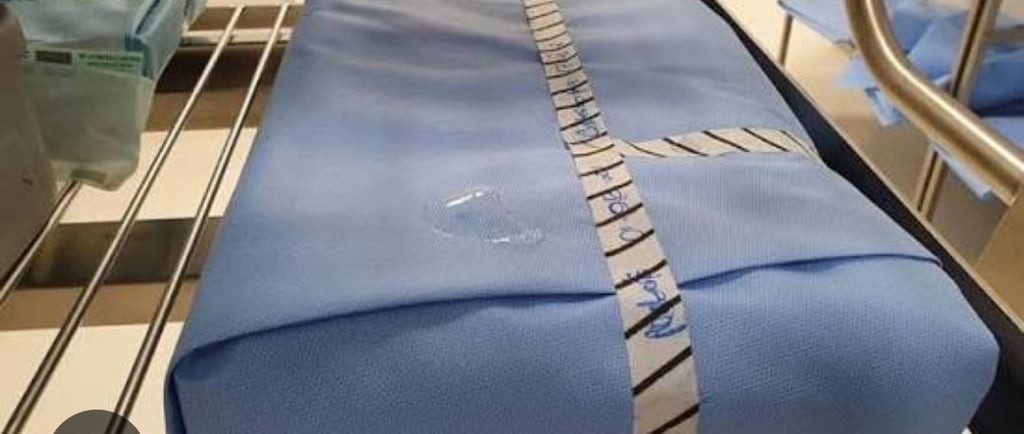
If you work in sterile processing, you’ve probably had that moment you finish a cycle, open the sterilizer, and see moisture on a tray. Instantly, you know what it means. The load can’t be released. Everything has to go back through. Schedules get tight. Everyone gets frustrated.
A wet pack is exactly what it sounds like: instruments that come out of the sterilizer with visible moisture. And in our world, moisture is a problem. Even a small amount can compromise the sterility of the set, which means it’s considered contaminated and must be reprocessed.
So why does it happen?
Most of the time, it’s not just one big failure. It’s small things.
Sometimes trays are overloaded or stacked too tightly, which doesn’t allow steam to circulate or drain properly. Other times, dry time gets shortened, especially on heavier sets that really need the full cycle to finish drying.
We also see equipment-related causes. Worn door gaskets, weak vacuum pumps, clogged drain lines, or poor steam quality can all prevent proper drying inside the sterilizer or autoclave. And if instruments come out of the washer/disinfector with water trapped in lumens or hinges, that moisture doesn’t magically disappear during sterilization.
Even the environment plays a role. Moving trays too quickly, placing hot packs on cold surfaces, or working in a high-humidity space can create condensation after the cycle completes.
How do you prevent it?
Start with the basics:
Don’t overload trays.
Follow the manufacturer’s cycle and dry time recommendations.
Let packs cool completely before handling.
Make sure instruments are dry before they ever reach the sterilizer.
Stay on top of preventative maintenance.
In many facilities, recurring wet packs are an early warning sign that something in the process or the equipment needs attention.
Wet packs aren’t just inconvenient. They cost time, resources, and potentially case delays. But with consistent loading practices, proper dry times, and well-maintained equipment, they’re largely preventable.
And when sterile processing runs smoothly, everything downstream runs better too.